
Residential HVAC systems occupy a central yet often overlooked position within the everyday functioning of urban housing. In Brooklyn, where residential buildings range from pre-war brownstones to contemporary multi-unit developments, heating and cooling systems must operate under conditions that are both climatically demanding and architecturally constrained. When failures occur, homeowners frequently turn to HVAC repair Brooklyn services not merely for comfort restoration, but to preserve habitability, safety, and energy efficiency.
While public discussion around HVAC systems often emphasizes equipment replacement or energy savings, repair practices themselves warrant closer attention. The decision to pursue hvac repair brooklyn ny services is rarely a simple technical matter; rather, it reflects broader considerations related to building age, system design, regulatory compliance, and household vulnerability to temperature extremes.
Residential HVAC Systems in the Context of Brooklyn’s Built Environment
Brooklyn’s residential infrastructure presents a distinctive context for HVAC operation and maintenance. Older housing stock frequently incorporates legacy ductwork, limited mechanical space, and electrical systems not originally designed to support modern heating and cooling loads. Conversely, newer developments often rely on ductless or hybrid systems that introduce different maintenance and repair challenges.
Scholarly discussions of building services increasingly emphasize the relationship between system performance and architectural form. In this regard, hvac repair in brooklyn cannot be separated from spatial constraints, shared building envelopes, and zoning regulations that shape repair feasibility. Technicians providing hvac repair services in brooklyn must therefore navigate not only mechanical diagnostics but also contextual limitations imposed by urban density.
Patterns of HVAC Failure in Residential Settings
Research on residential mechanical systems suggests that HVAC failures tend to follow identifiable patterns rather than occurring randomly. In Brooklyn homes, uneven temperature distribution, frequent cycling, and delayed system response are among the most commonly reported issues. These symptoms often indicate underlying airflow restrictions, sensor calibration problems, or component fatigue.
Heating-related failures merit particular attention during winter months, when system reliability becomes a matter of health and safety. It is under such conditions that homeowners increasingly seek emergency HVAC repair Brooklyn services, especially when indoor temperatures fall below habitable thresholds.
From an analytical standpoint, these failures highlight the cumulative effects of deferred maintenance and prolonged system strain, rather than isolated mechanical defects.
Interpreting Early Indicators of HVAC System Distress
Early warning signs play a critical role in mitigating long-term system damage. Audible irregularities—such as persistent rattling or grinding—are widely recognized indicators of mechanical imbalance. Odor-related cues, including burning or musty smells, may suggest electrical faults or moisture accumulation within system components.
Energy consumption patterns also provide valuable diagnostic insight. A sustained increase in utility costs, absent changes in usage behavior, frequently signals declining system efficiency. In such cases, consultation with an hvac repair service brooklyn ny provider may prevent escalation into more extensive repairs.
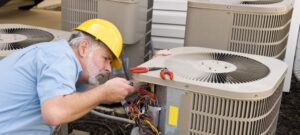
The Importance of Timely HVAC Repair in Brooklyn NY
The timing of intervention has significant implications for repair outcomes. Empirical studies in building maintenance consistently demonstrate that delayed repairs correlate with higher lifecycle costs. In residential contexts, postponing hvac repair brooklyn ny services can accelerate component degradation and compromise system safety.
Beyond economic considerations, delayed repair raises concerns related to indoor environmental quality. Malfunctioning HVAC systems may contribute to inadequate ventilation, elevated humidity, or uneven heating, all of which disproportionately affect vulnerable populations within households.
Professional HVAC Repair Practices: An Analytical Overview
Professional hvac repair services in brooklyn typically follow a structured diagnostic methodology. Initial inspections assess electrical continuity, airflow balance, thermostat calibration, and refrigerant integrity. Importantly, competent practitioners distinguish between symptomatic failures and root causes, an approach that reduces recurrence.
Decision-making during the repair process often involves evaluating the trade-off between component replacement and full system upgrade. Ethical practice within brooklyn hvac repair emphasizes transparency, particularly when system age or obsolescence limits repair viability.
Emergency HVAC Repair Brooklyn: A Critical Service Category
The classification of HVAC failures as “emergencies” is not merely rhetorical. Situations involving complete heat loss, electrical hazards, or refrigerant leaks necessitate immediate response. Emergency hvac repair brooklyn services are designed to address such risks, prioritizing stabilization over optimization.
From a public health perspective, emergency HVAC intervention serves a preventive function, particularly during extreme weather events that strain residential systems beyond normal operating conditions.
Evaluating the Best HVAC Repair Brooklyn Providers
Determining the best HVAC repair Brooklyn option involves more than cost comparison. Licensing, insurance coverage, and demonstrated experience with residential systems form the baseline criteria. However, local familiarity with Brooklyn’s building typologies often proves equally significant.
Scholarly perspectives on service reliability emphasize responsiveness, diagnostic rigor, and communication clarity as key indicators of professional quality within hvac repair in brooklyn markets.
Residential and Commercial HVAC Repair Brooklyn: A Conceptual Distinction
Although residential and commercial HVAC repair Brooklyn services share technical foundations, their operational priorities diverge. Commercial systems prioritize load management and continuous operation, whereas residential systems emphasize comfort modulation and energy efficiency.
For homeowners, engaging specialists focused on residential hvac repair services in brooklyn ensures that repair strategies align with domestic usage patterns rather than commercial performance metrics.
Preventive Maintenance as a Risk Mitigation Strategy
Preventive maintenance occupies a central position in contemporary building management discourse. Regular inspections, filter replacement, and seasonal calibration reduce failure probability and extend system lifespan. Evidence suggests that households adhering to maintenance schedules experience fewer emergency interventions and lower cumulative repair costs.
Such findings reinforce the argument that HVAC repair Brooklyn services function most effectively when integrated into long-term maintenance planning rather than reactive problem-solving.
Conclusion
Residential HVAC repair in Brooklyn exists at the intersection of mechanical reliability, architectural context, and household wellbeing. Understanding system behavior, recognizing early warning signs, and engaging qualified hvac repair brooklyn ny professionals allows homeowners to navigate this complexity more effectively.
Rather than viewing HVAC repair as an episodic inconvenience, it may be more productively understood as an ongoing process that sustains residential comfort, safety, and efficiency within a demanding urban environment.
FAQs
1. How often should residential HVAC systems be inspected in Brooklyn?
Annual inspections are generally recommended, with additional evaluations following periods of heavy use.
2. What situations require emergency HVAC repair Brooklyn services?
Complete system failure, electrical hazards, and unsafe indoor temperatures typically warrant emergency intervention.
3. Are HVAC repair services in Brooklyn cost-prohibitive?
Costs vary, though early repair tends to be significantly less expensive than delayed intervention.
4. Can HVAC repair improve indoor air quality?
Yes. Addressing airflow, filtration, and humidity issues often results in measurable air quality improvements.
5. How should homeowners assess HVAC repair service providers?
Licensing, local experience, diagnostic transparency, and documented reliability are key evaluation criteria.